

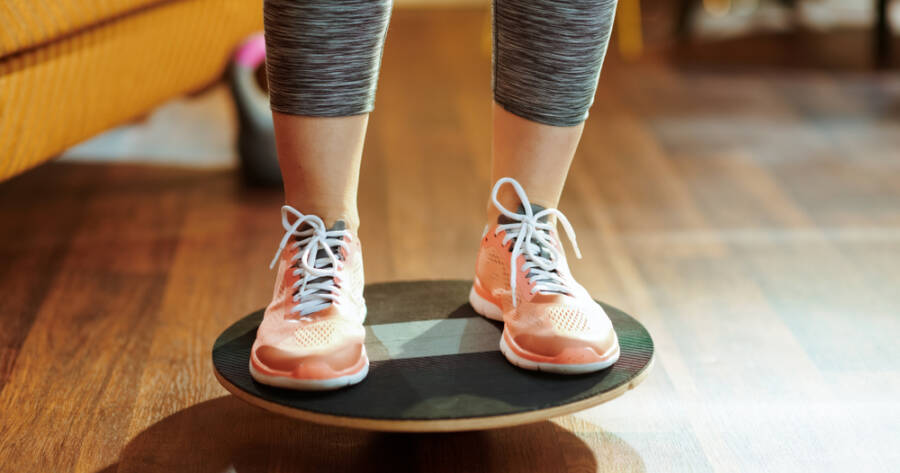
A balance board can make short desk breaks feel more active without turning your workday into a full workout. The board creates a slightly unstable surface, so your feet, legs, hips, and core make small adjustments while you stand or move. The right choice depends on your space, comfort level, and goal. Some boards are best for gentle standing, while others are better for squats, planks, ankle work, and focused core practice.
At a Glance: Types of Balance Boards
| Board Type | Best Use | Movement Level | Desk-Friendly? | Core Practice? |
|---|---|---|---|---|
| Standing desk balance board | Gentle movement while working | Low to moderate | Yes | Light |
| Wobble board | Balance drills and core practice | Moderate | Sometimes | Moderate |
| Rocker board | Controlled side-to-side movement | Low to moderate | Yes | Light to moderate |
| Roller board | Advanced balance training | High | No | Strong |
| Cushioned balance pad | Beginner balance and foot comfort | Low | Yes | Light |
What a Balance Board Can and Cannot Do
A balance board is not a magic fitness tool. It will not replace walking, strength training, stretching, or regular exercise. It is best used as a small movement tool during the day or as part of short balance and core drills.
Standing on a balance board during desk work has been studied as a way to compare sitting, standing, and standing on a board. The research found that board standing increased energy use more than sitting or regular standing, without clear harm to typing productivity in that study.
Standing Desk Balance Boards: Best for Gentle Workday Movement
Standing desk balance boards are made for people who want small movement while working. They usually have a wide standing surface and a stable base that lets the board rock or tilt without feeling too wild. The goal is gentle motion, not a circus act.
The FluidStance Level is one example in this category. It is designed for standing desks and uses a curved base to support small, natural movement while the user works.
Pros:
- Good for short desk breaks or light standing sessions
- Usually calmer than advanced fitness boards
- Better fit for typing, calls, and reading
- Often looks more polished in a home office
Cons:
- Can cost more than basic wobble boards
- Not ideal for intense core drills
- Still requires attention when stepping on or off
- May feel unnecessary if you already take regular walking breaks
Wobble Boards: Best for Core Practice and Ankle Control
A wobble board usually has a round or oval platform with a raised center under it. It can tilt in many directions, which makes it useful for balance drills, ankle control, and short core-focused moves. It is more active than many standing desk boards.
The Yes4All wooden wobble board is one example. It features a 15.75-inch surface, 360-degree movement, a 15-degree tilt angle, an anti-skid surface, and support up to 300 pounds.
Pros:
- Good for short balance drills
- Can be used for squats, planks, pushups, and standing practice
- Usually compact and easy to store
- Often more affordable than premium desk boards
Cons:
- Less comfortable for long desk sessions
- Can feel too unstable for beginners
- Round designs may not suit narrow standing areas
- Not ideal for multitasking until you feel steady
Rocker Boards: Best for Controlled Side-to-Side Movement
A rocker board usually moves in one main direction, such as side to side or front to back. That makes it easier to control than a full wobble board. It can be a smart choice for people who want movement but do not want 360-degree instability.
The StrongTek professional wooden board is one example of a compact rocker-style option. It features a 17.5-inch by 13.5-inch surface, a 3-inch height, and a 15-degree tilt angle, and it describes the board as usable at a standing desk.
Pros:
- Easier to control than many wobble boards
- Useful for beginners who want a clear movement pattern
- Better for desk breaks than roller boards
- Compact enough for many home offices
Cons:
- Less dynamic than a full wobble board
- May feel too simple for advanced users
- Still takes practice before using it while typing
- The rocking path may not challenge balance in every direction
Anti-Fatigue Balance Boards: Best for Standing Comfort
Some balance boards are closer to anti-fatigue mats than workout tools. They may have a padded top, a low tilt, or a raised massage-style bar for foot movement. These are better for comfort and gentle shifting than for hard balance practice.
The FEZIBO standing desk mat balance board is one example. It features a wooden wobble balance board design, anti-fatigue use, 20-by-14-inch and 25-by-14-inch size options, and a version with a raised bar.
Pros:
- Better for comfort-focused standing
- Less intense than many fitness boards
- Useful for people who shift weight while working
- May feel more natural for a standing desk setup
Cons:
- Not the best choice for serious core drills
- Padding and shape may limit exercise variety
- Larger versions need more floor space
- Can become another floor item if not stored well
Roller Boards: Best for Advanced Balance Practice
A roller board uses a board placed on top of a cylinder or roller. This design is much harder than a wobble or rocker board because the board can slide and tip. It is usually better for sports-style balance practice than for desk work.
A roller board can build coordination, but it also raises the risk of slipping if you are not ready for it. Use it on a clear floor, keep furniture away, and start near a wall or support. This is not the best first board for a workday break.
Pros:
- Strong challenge for balance and coordination
- Useful for advanced core practice
- Can feel fun for people who like board sports
- Good for focused sessions away from the desk
Cons:
- Not a good fit for typing or meetings
- Higher fall risk than low-profile boards
- Needs more open space
- Too intense for many beginners
Cushioned Balance Pads: Best for Beginners
A cushioned balance pad is not a board in the strictest sense, but it can serve the same purpose for beginners. The soft surface makes standing slightly less stable, which asks your lower body and core to adjust. It is usually less intimidating than a hard board.
This can be a good starting point for people who are cautious, returning to movement, or working near a desk. It is also easy to step off, which matters if you are still building confidence. People with fall risk, dizziness, recent injury, or medical concerns should use support and seek qualified guidance before trying unstable surfaces.
Pros:
- Gentle option for beginners
- Easier to step on and off
- Useful for foot comfort and light balance practice
- Works well near a desk or counter
Cons:
- Less challenging than a board
- May not satisfy people who want active core drills
- Soft surfaces can feel awkward in some shoes
- Not as engaging for long-term progression
How to Choose the Right Board
Start with your main goal. If you want movement while reading emails, choose a standing desk board or a low rocker board. If you want short core drills, choose a wobble board. If you want a serious balance challenge, a roller board may make sense later.
Also match the board to your space. A small office with a tight floor path needs a compact board that is easy to move. A garage gym or open room can handle a wider board or a more active model.
How to Use a Balance Board Safely at a Desk
Start with short sessions. Try one to three minutes near a wall, desk, or chair before using the board during actual work. Step on slowly, keep your knees soft, and avoid locking your legs.
Do not use a balance board for every standing minute. It’s best to rotate between sitting, standing, walking, and board use. Balance activities can support steadiness, but they work best as one part of a broader movement routine.
Simple Core Practice Moves
For a quick core session, try standing balance, slow side-to-side rocks, gentle circles, shallow squats, or plank hands on the board. Keep the movement controlled. The goal is quality, not speed.
Core training has been linked with better dynamic balance in research reviews, which supports using balance work as part of a broader core routine. Still, a board should match your ability level. If you are shaking hard or holding your breath, make the move easier.
Who Should Skip or Modify Balance Board Use?
A balance board may not be right for everyone. People with high fall risk, dizziness, nerve problems, recent ankle or knee injuries, or poor balance should be careful. Use a stable support nearby and ask a qualified professional if you are unsure.
A board also may not be useful if it distracts you from work. If your typing gets sloppy, your meetings feel awkward, or your feet get tired, use the board only during breaks. The best tool is the one that supports your day instead of taking it over.
Start Small and Build Balance Over Time
The best balance board depends on how you plan to use it. A standing desk balance board is best for gentle workday movement. A rocker board gives controlled motion. A wobble board works well for core practice. A roller board fits advanced balance training. A cushioned pad is the safest starting point for many beginners.
Start with the easiest version that you will use often. A few short balance breaks can make your workday feel more active without turning your office into a gym. Keep sessions short, stay near support at first, and build slowly as your control improves.