

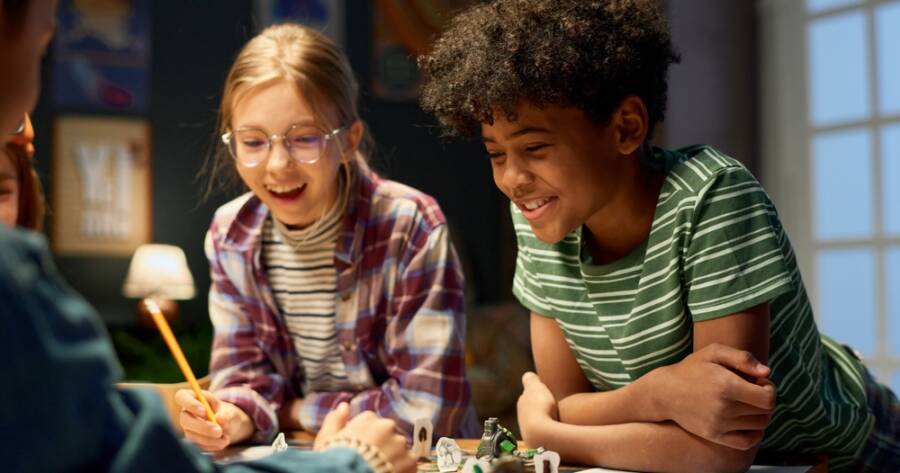
Family game night can do more than fill an evening. The right board game can help kids practice listening, taking turns, making group decisions, and handling pressure without turning the night into a lecture. Teamwork games are especially useful because players often have to solve one shared problem instead of only trying to beat each other. Enjoy a low-stress way to practice cooperation, patience, and flexible thinking around the table.
How Competition Can Ruin Board Game Night
Competition is not always a problem, but it can take over when the goal becomes winning at any cost. Some kids shut down when they fall behind, while others argue, rush turns, or blame teammates. When that happens, the game stops teaching patience and starts creating stress. A family game night should still feel fun, even when someone loses.
Teamwork games can lower that pressure because the family is working against the game instead of against each other. Parents can also set the tone by praising helpful choices, not just smart moves. Saying “That was a good idea to ask for help” or “I liked how you listened before deciding” teaches kids that cooperation matters more than being the winner.
Quick Comparison: Teamwork Board Games for Families
| Game | Best For | Teamwork Skill | Player Count | Good Fit |
|---|---|---|---|---|
| Outfoxed! | Younger kids | Sharing clues and making group guesses | 2 to 4 | Early elementary families |
| Forbidden Island | Strategy practice | Planning moves together | 2 to 4 | Older kids and mixed-age families |
| Castle Panic | Action-style cooperation | Defending a shared goal | 1 to 6 | Families who like light fantasy |
| The Crew | Quiet teamwork | Careful communication | 3 to 5 | Older kids, teens, and adults |
| Mysterium | Creative teamwork | Reading clues and discussing ideas | 2 to 7 | Families who like mystery games |
| Wavelength | Group discussion | Explaining opinions and reading others | 2 or more teams | Teens, adults, and party settings |
Outfoxed!: Best for Younger Kids Learning to Share Clues
Outfoxed! is a cooperative deduction game for ages 5 and up, with 2 to 4 players and a listed play time of about 20 minutes. Players work together to identify the guilty fox before it escapes, which makes the game feel like a kid-friendly mystery rather than a simple race.
That setup makes Outfoxed! useful for teaching teamwork because no single child has to carry the whole game. Kids can compare clues, talk through guesses, and practice changing their minds when new information appears. It also gives parents a natural way to model phrases like “What clue do we have?” or “Let’s check before we decide.”
Forbidden Island: Best for Teaching Group Planning
Forbidden Island is a cooperative adventure game from designer Matt Leacock that is built around shared play, changing tiles, and card-driven challenges. The game is commonly listed for 2 to 4 players, ages 10 and up, with a play time around 30 minutes.
This is a strong pick for families that want teamwork with a little more strategy. Players need to decide which areas to protect, which treasures to collect, and when to move together instead of acting alone. The lesson is clear without being preachy: the team usually does better when players explain their plans before they act.
Castle Panic: Best for Defending One Shared Goal
Castle Panic is a cooperative tower defense board game for 1 to 6 players. Players work together to protect a castle from monsters moving in from the edges of the board.
That shared threat makes the teamwork easy to understand. Everyone can see what will happen if the group ignores one side of the board. This helps kids practice spotting problems, asking for help, and choosing the move that helps the team most, even when it is not the most exciting move for their own turn.
The Crew: Best for Older Kids Who Need Careful Communication
The Crew is a cooperative trick-taking card game where players complete 50 missions while traveling through space. The game’s own setup stresses that the group must work together, while communication is limited by the rules.
That makes The Crew a smart option for older kids, teens, and adults who already understand basic card play. It teaches a quieter kind of teamwork, where players must pay attention to what others do, not just what they say. Families that enjoy puzzles may like how each mission asks the group to improve together over time.
Mysterium: Best for Creative Group Problem-Solving
Mysterium is a cooperative game of deduction and teamwork for 2 to 7 players. One player acts as the ghost, while the others use visual clues to work toward the correct suspect, location, and object.
This game is useful because the clues are open to interpretation. One player may see a color clue, while another notices a shape, mood, or object. That gives families a good chance to practice listening to different viewpoints before making a group decision.
Wavelength: Best for Conversation and Reading the Room
Wavelength is a social guessing game where teams try to read each other’s minds. The game is built around talking through ideas, making judgments, and landing on a shared answer.
This is not a classic cooperative board game in the same way as Forbidden Island or Castle Panic, since teams compete. Still, it can teach a valuable teamwork skill: explaining how you think. It works especially well for older kids and adults because the fun comes from discussion, debate, and realizing that people can interpret the same clue in different ways.
How to Pick the Right Teamwork Game for Your Home
Start with age and patience level. Younger kids often do better with short games, clear choices, and a visible goal. Outfoxed! works well here because the mystery is simple enough for kids to follow, while still giving them a reason to talk through clues together.
For older kids, choose a game that adds more planning. Forbidden Island and The Crew are better when players can think a few turns ahead and handle setbacks without quitting. If your family likes active board states and visible pressure, Castle Panic may be the easier sell.
What Parents Can Teach During the Game
The best teamwork lessons usually happen during play, not after a long speech. Parents can pause and ask simple questions like “Who needs help this turn?” or “What happens if we ignore that problem?” These prompts let kids practice shared planning without feeling corrected.
It also helps to rotate who speaks first. In cooperative games, one loud player can accidentally take over. A simple house rule, such as asking the youngest player for an idea first, can make the table feel more balanced and give quieter kids a real role in the team.
Make Teamwork the Main Win
The best board games for teamwork are not always the most complex ones. They are the games that get players talking, planning, adjusting, and helping each other. Outfoxed! is a gentle starting point for younger kids. Forbidden Island, Castle Panic, The Crew, and Mysterium add deeper group decisions as kids get older. Wavelength brings teamwork into conversation and social guessing.
A good family teamwork game should leave players feeling like their choices mattered. When kids learn to listen, share clues, and solve problems together, game night becomes more than entertainment. It becomes a small practice space for skills they can use at home, at school, with friends, and eventually in their careers.